
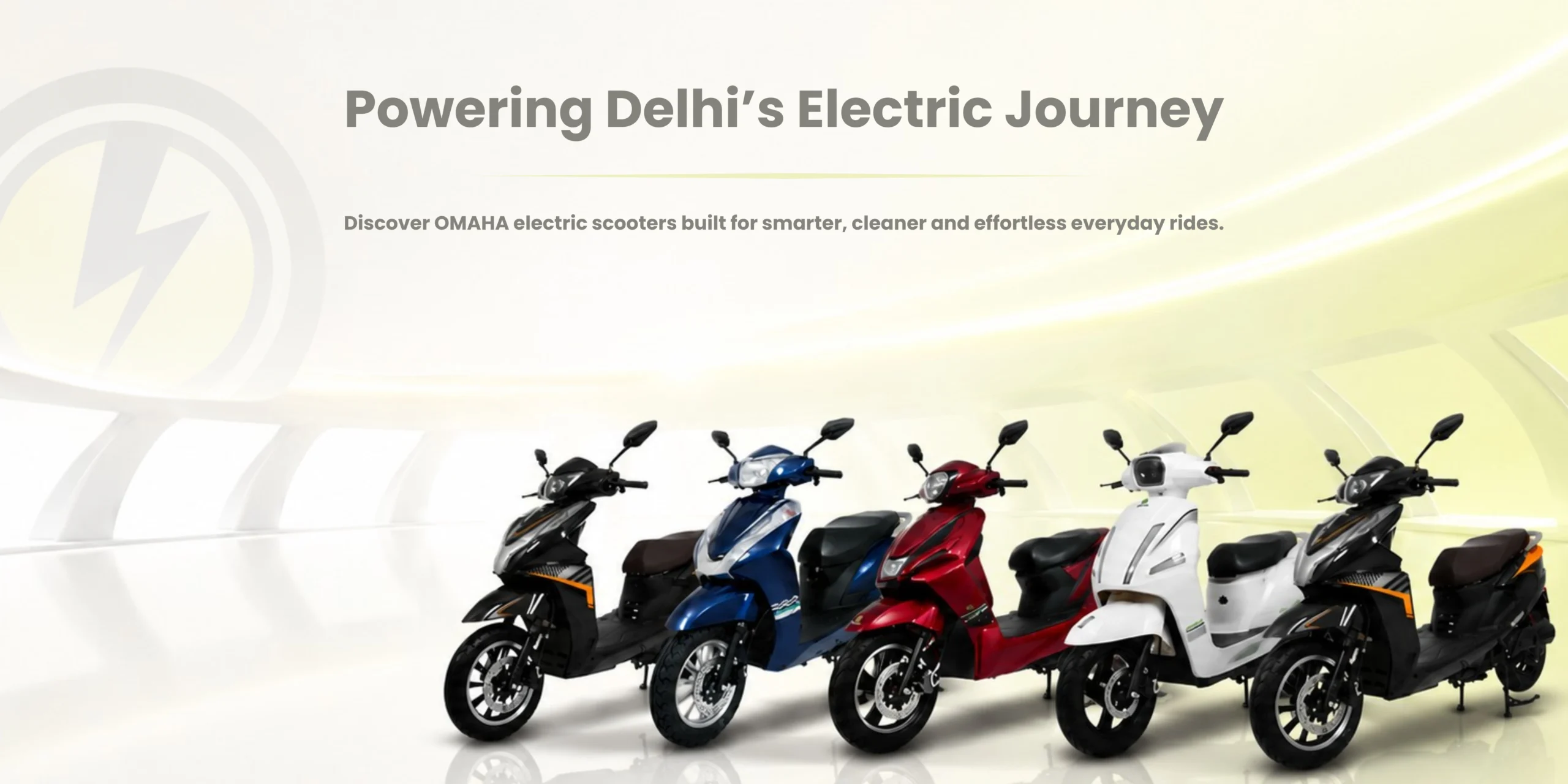
Last November, a college student in Dwarka spent ₹247 on a single day of petrol and auto-rickshaw rides – morning classes, then a coaching centre in Rajouri Garden, then back home. She did the maths on the back of her notebook. That one day, repeated five times a week across eight months, added up to more than ₹79,000 a year just on getting from one place to another. Two months later, she bought an Omaha Starling Neo from a dealer in West Delhi. Her monthly travel cost dropped to roughly ₹300 worth of electricity. She still carries that notebook.
Stories like hers are becoming common across every corner of Delhi. And there is a reason they keep multiplying.
Why Delhi Is Switching to Electric Scooties Faster Than Any Other City
Delhi has more than 75 lakh two-wheelers on its roads roughly 67 per cent of every vehicle registered in the city. That is not just a traffic problem. It is the single biggest reason the capital’s air stays dangerously polluted even outside winter months. The Commission for Air Quality Management has said it plainly: transport is the most prominent pollution source within Delhi, and two-wheelers make up the bulk of it.
The Delhi government is not waiting anymore. Under the new Delhi EV Policy 2.0 – officially notified on 30 June 2026 and effective from 1 July 2026 – no new petrol two-wheeler will be allowed to register in Delhi after 31 March 2028. That is less than two years away. For anyone buying a new scooty today, the choice between petrol and electric is no longer just about saving fuel. It is about buying something that will still be relevant three years from now and to make the switch easier, Delhi is offering the most generous EV subsidies in the country right now: a ₹30,000 direct purchase subsidy on electric two-wheelers in Year 1, a 100 per cent road tax and registration fee waiver, and an additional ₹10,000 scrapping incentive if you retire an old BS-IV or older petrol two-wheeler. Combined, a Delhi buyer can save up to ₹40,000 or more on a new electric scooty before you even count the daily fuel savings.
This is exactly why the demand for an electric scooty in Delhi has gone through the roof and Omaha Electric is right at the centre of it.
Your riding
Monthly running cost
You save every year
That's ₹2,082 back in your pocket every month.
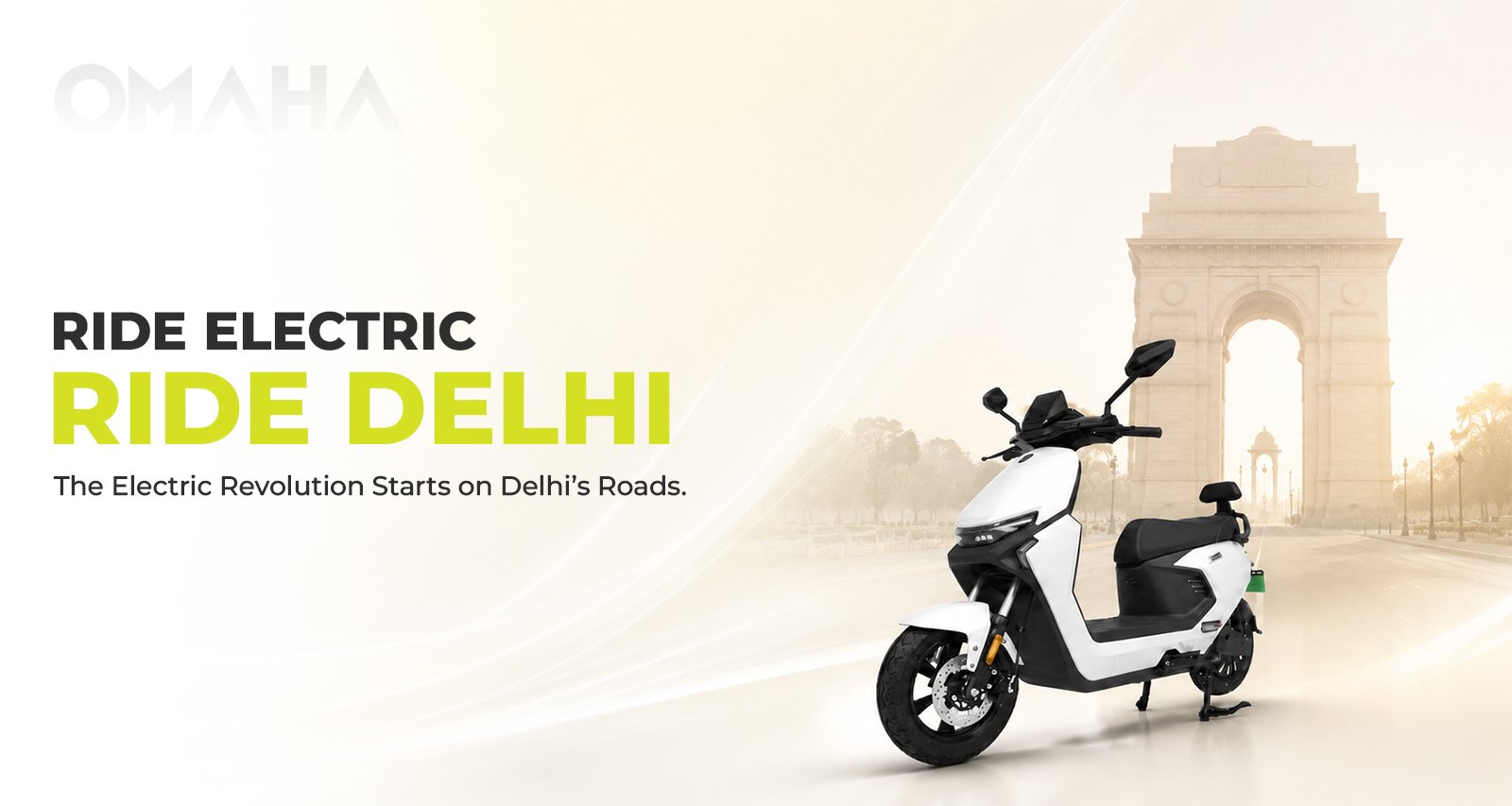
Omaha Electric Scooty - Built in India, Made for Delhi's Roads
Omaha Electric is not a faceless import brand with a flashy website and no service network. It is a product of JVG Electric Private Limited, a company headquartered in Hisar, Haryana, with manufacturing plants in both Haryana and West Bengal. Every Omaha electric scooter is designed and assembled in India, under Indian conditions, for Indian roads — especially the kind of roads you actually ride on in Laxmi Nagar, Karol Bagh, or Mehrauli.
What sets Omaha apart from the dozens of EV brands crowding Delhi showrooms? Three things that actually matter in daily life:
No licence. No registration. No insurance.
Omaha scooters are slow-speed EVs, so under current Motor Vehicle rules they need no licence, RC or insurance. A college student, a senior citizen, anyone who's never set foot in an RTO can buy one and ride home the same day. In a city where an RTO queue can swallow a whole working day, that isn't a small perk — it's the deal-maker.
Range built for real Delhi commutes.
Most Omaha scooties do 70–80 km on a single charge — enough for a Rohini-to-Connaught-Place round trip with room to spare. Charge overnight on any standard home plug point: 3–5 hours for lithium models, 6–8 for lead-acid. No hunting for public chargers, no range anxiety on the way to office.
A price that stays on the ground.
Over 15 models to pick from — from the compact Active Mini for narrow-gali rides to the loaded Tezo GT with cruise control, anti-theft alarm and dual disc brakes. Starting prices stay well within reach for students, homemakers, small-business owners and delivery riders across Delhi NCR.
15+ models
There is an Omaha electric scooty for every Delhi rider
One of the biggest frustrations with buying an electric scooty in Delhi is that most brands offer two or three models and expect everyone to fit into them. A delivery rider in Chandni Chowk does not have the same needs as a working professional commuting from Noida to Nehru Place.
Omaha solves this with one of the widest electric scooter ranges in the market. Here is a quick look at what is available:
No models in this category yet.
Real running cost
What it actually costs to ride an Omaha electric scooty in Delhi, every day
Forget the brochure numbers for a minute. Here is what real daily use looks like.
An average Delhi two-wheeler rider covers about 30 to 40 kilometres a day — home to work, a few errands, maybe dropping the kids to tuition. On a petrol scooter at current Delhi fuel prices, that costs roughly ₹100 to ₹130 per day. Over a month, you are spending ₹3,000 to ₹4,000 on petrol alone, not counting servicing, oil changes, and the occasional emission test fees.
An Omaha electric scooty covering the same distance costs about ₹10 to ₹15 in electricity per day. Monthly running cost: ₹300 to ₹450. Annual running cost: under ₹5,000.
The same commute, at a glance:
Per day
₹10–15
Per month
₹300–450
Per year
Under ₹5,000
And because electric scooties have far fewer moving parts, your maintenance costs drop dramatically too:
When you add the Delhi government's ₹30,000 purchase subsidy and the road tax waiver on top of those daily savings, the total cost of ownership over three years is often less than one year's fuel bill on a petrol scooty.
Estimate your savingsRunning costs are estimates based on typical Delhi usage and current fuel & electricity rates; actual figures vary by model, battery type and riding pattern.
How to buy
Buy an Omaha electric scooty in four steps
Omaha operates through a network of authorised dealers across Delhi and the NCR region. The purchase process is straightforward — here's exactly how it goes.
Or become a dealer
Want to sell Omaha, not just ride one? Dealership opportunities start from approximately ₹5–6 lakhs — one of the lowest entry points in the EV dealer market.
Call +91 99961 17882-
1
Visit a dealer
Visit or contact an authorised Omaha dealer in Delhi. Find dealer info at omahaev.com or call the helpline at +91 99961 17882 to locate your nearest showroom.
-
2
Pick your model
Choose your model and test ride two or three options. Tell the dealer what your daily route looks like, and they will help you pick the right model and battery type.
-
3
Buy and ride
Complete the purchase. Since most Omaha models are slow-speed EVs, there is no registration paperwork or insurance formality to deal with. Pay, collect your scooter, and ride.
-
4
Claim the subsidy
Apply for the Delhi EV subsidy within 30 days of purchase at evsubsidy.delhi.gov.in. Upload your documents and the ₹30,000 subsidy is credited straight to your bank account through DBT.
Subsidy amount, eligibility and the 30-day window are set by the Delhi government and may change; confirm current terms on the official portal before applying.
Why Omaha
Why Omaha over other electric scooty brands in Delhi
Delhi has no shortage of electric scooty brands competing for attention. But here is what dealers and customers consistently point out about Omaha.
Made in India
Spare parts are available locally, service turnaround is faster, and you are never dependent on imported components that take weeks to arrive. When something needs fixing, it gets fixed — not shipped for.
A model for every rider
You are not forced into a one-size-fits-all product. You pick what matches your life — not whatever the brand happens to sell.
Zero paperwork headaches
Low-speed models need no licence, no RC and no insurance — a genuine advantage for the huge segment of Delhi riders who just want hassle-free personal mobility.
Affordable — with real features
These are not stripped-down "budget" scooters. They are fully equipped everyday vehicles that happen to cost less:
A network that's growing fast
Omaha's dealer and after-sales network is expanding rapidly — already established across Haryana and West Bengal, and actively growing throughout Delhi NCR.